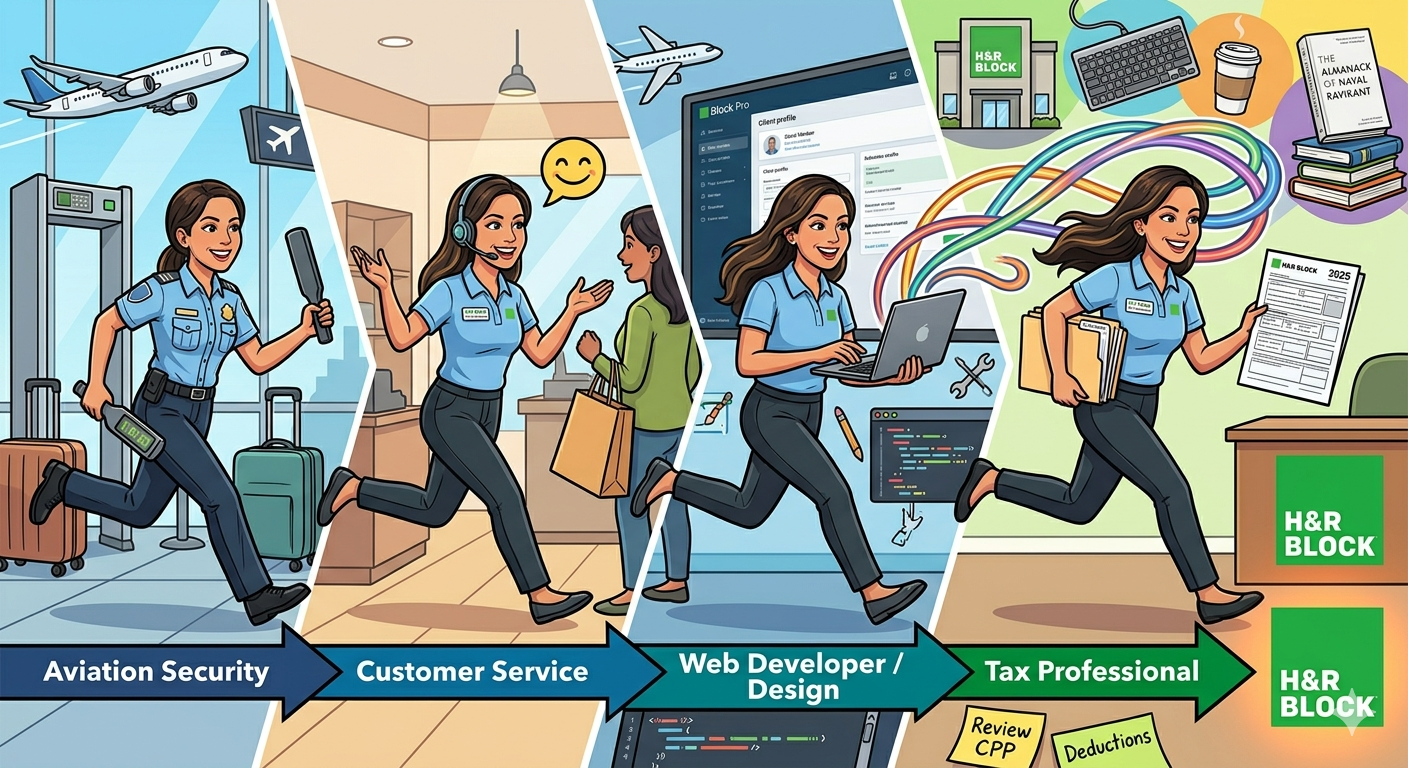
From Developer to Tax Professional: What One Tax Season Taught Me About People, Systems, and Real Workflows
In September 2025, I finally enrolled in the H&R Block Tax Academy course I had been thinking about for a long time.
Before that, I had spent three years working in software development and technical support. But after leaving my previous role in April 2025, I finally had the time to pursue something I had genuinely been curious about for years: tax.
My interest in numbers started much earlier. Back in high school, I studied in a science-focused academic track. Later, during my working holiday experience in Australia, financial survival pushed me to become more disciplined with budgeting, expense tracking, and long-term planning. That experience made me curious about how money, taxes, and government systems actually work together.
The H&R Block course turned out to be one of the most rewarding learning experiences I’ve had.
https://www.hrblock.ca/tax-academy
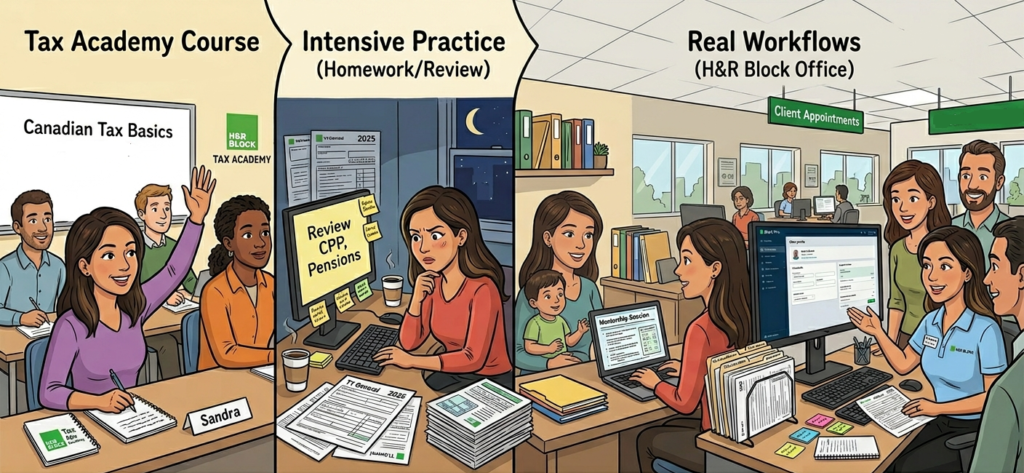
Although the class officially ran once a week for eight hours, I spent many additional hours reviewing recordings, printing practice cases, taking handwritten notes, and studying after class. I genuinely enjoyed learning how CPP, pensions, tax credits, and government programs interact with real-life situations. It was fascinating to see how tax policy can influence behaviour and support different groups of people in different ways.
I was also fortunate to have an excellent mentor who patiently answered my questions both during class and through email afterward. Tax scenarios can change dramatically based on small details, so having someone willing to explain the “why” behind rules helped me build confidence quickly.
After completing the course, I was given the opportunity to work as a Tax Professional at H&R Block. During the season, I handled more than 200 tax cases.
That experience gave me something I could never fully learn from a classroom: exposure to real operational workflows, real clients, and real pressure.
I learned how important speed, clarity, and trust are during client-facing interactions. A tax professional is not only preparing returns — they are also managing communication, reducing uncertainty, verifying information, and helping clients feel confident about financial decisions.
At the same time, working extensively with Block Pro gave me a new perspective as someone with a technical background.
I began noticing how system design decisions directly affected workflow efficiency, cognitive load, and user confidence during busy periods. In some situations, users needed to manually cross-reference information between multiple profiles or navigate through extra steps that increased processing time per case. I became increasingly interested in how internal tools, UX decisions, and workflow design impact real frontline operations.
Coming from a software background, I found myself naturally thinking about questions such as:
- How can systems reduce unnecessary cognitive load?
- How can interfaces better support real tax office workflows?
- How can products remain flexible without creating unnecessary friction?
- How can software help tax professionals move faster while still maintaining confidence and accuracy?
What surprised me most, however, was the people.
I met coworkers from very different backgrounds, personalities, and life stages. Some were retirees simply looking to stay active. Some were parents balancing school and work. Some were pursuing new opportunities while helping clients through tax season. Despite occasional stress and busy days, people were generally supportive and willing to help each other.
Looking back, this tax season became much more than just a temporary job.
It rebuilt my confidence after a difficult career transition. It strengthened my communication skills, taught me how operational environments really function under pressure, and gave me firsthand experience with how people interact with systems in real-world scenarios.
Most importantly, it reminded me that good products are not only about features or technical implementation.
They are about helping real people do difficult work more clearly, confidently, and efficiently.